

Using the right equipment at gigs and events is crucial to ensure you are providing an
enjoyable experience to your guests and audience. The equipment you require will vary
depending on the size of your space, as well as its set up. At Pro Audio Systems, we’re here
to help you ensure that your PA system is configured correctly so you get the best out of it
, no matter what equipment you’re using or what you’re using it for.
In our series of latest blogs, we’ll be looking at optimising your PA setup in small venues,
including your stage monitors, sub-woofers, microphones and mixer etc. In this entry we’ll
be looking at passive and active speakers and which option will best fit your audio
requirements for a smaller space.

(Above: MONTARBO R 112 12″ ACTIVE LOUDSPEAKER / WEDGE MONITOR)
What are passive and active speakers?
All speakers fit into either the passive or active category, so it’s important to compare the
differences between the two before making a purchase…
Passive speakers are essentially a speaker without a built-in amplifier, so in order to
produce sound, they need to be connected to and powered by an external power
amplifier. Active speakers, on the other hand, come with a built-in amplifier and are often
referred to as powered speakers as they need to be plugged into a power source such as
a battery or mains socket.
Advantages and disadvantages
There are lots of pros and cons to both passive and active speakers, so it’s important to
choose the right option for your needs. Consider how easy they are to set up and use, the
other equipment required and the features that each type of speaker provides you with.

Active speakers can be easier to set up – all you need to do is simply connect your audio devices, power the speakers, and you’re good to go. Plus, it’s often a lot easier to get a great sound out of an active speaker due to the built-in amplifier and signal processing. These are designed to work together with the loudspeakers and cabinet to produce optimal sound quality. They are ideal in scenarios where you want to deploy a system quickly, for solo artists, duos, DJs, and small bands. Active systems are also scalable to cater for larger venues and applications.
If you go down the passive speaker route, you are required to purchase your own amplifiers that needs to be suitable in terms of power output – but don’t worry, we can assist with your selection. You will also need a mixer, or pre-amplifier, to connect your sound sources to, to provide the power amplifiers with the correct signal level. Although this may sound daunting, a passive system can often give the user more flexibility with their sound as you can choose how to connect the system and what else to use in the signal chain, in terms of signal processing, mixers, effects and so on.
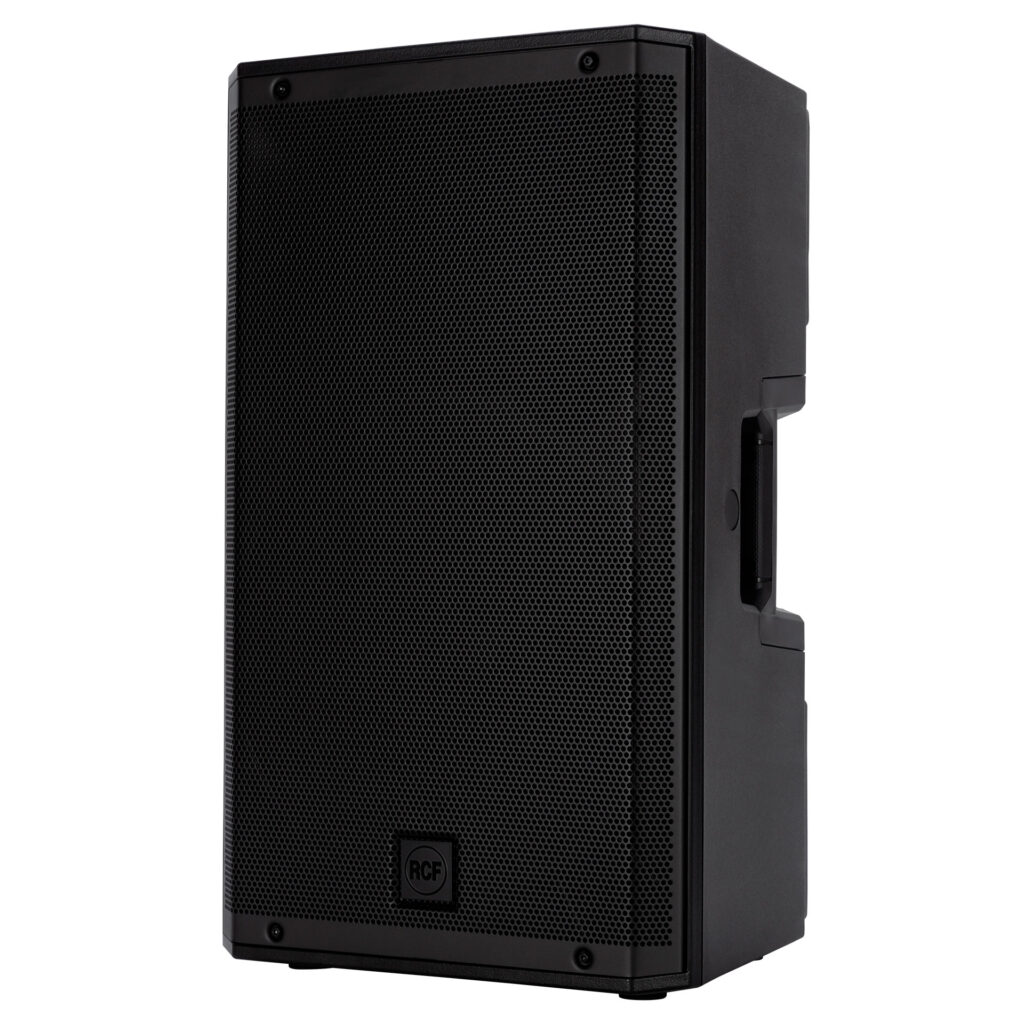
(Above: RCF ART 932-A ACTIVE SPEAKER)
There is a lot to consider when choosing between a passive or active speaker system. Following our guidance will hopefully help you to find the best speaker option for events in small venues, allowing you to continually provide the best quality sound for your audience.
We appreciate that finding the correct equipment and making the correct selection can seem overwhelming, so if you require any assistance choosing products for your PA system, we are on hand to help.
Call 01274 777 200 or email sales@pasystems.co.uk to speak to one of our experts.

